Origins: Building the Honeybourne Line (1890s–1906)
The route between Cheltenham and Honeybourne was engineered by the Great Western Railway (GWR) as a strategic 'super-highway' designed to break the Midland Railway’s monopoly on the West Midlands to South West corridor. By creating this high-capacity link, the GWR bypassed the notoriously steep Lickey Incline, establishing a faster, flatter route for heavy traffic between Wolverhampton, Birmingham, and the West Country.
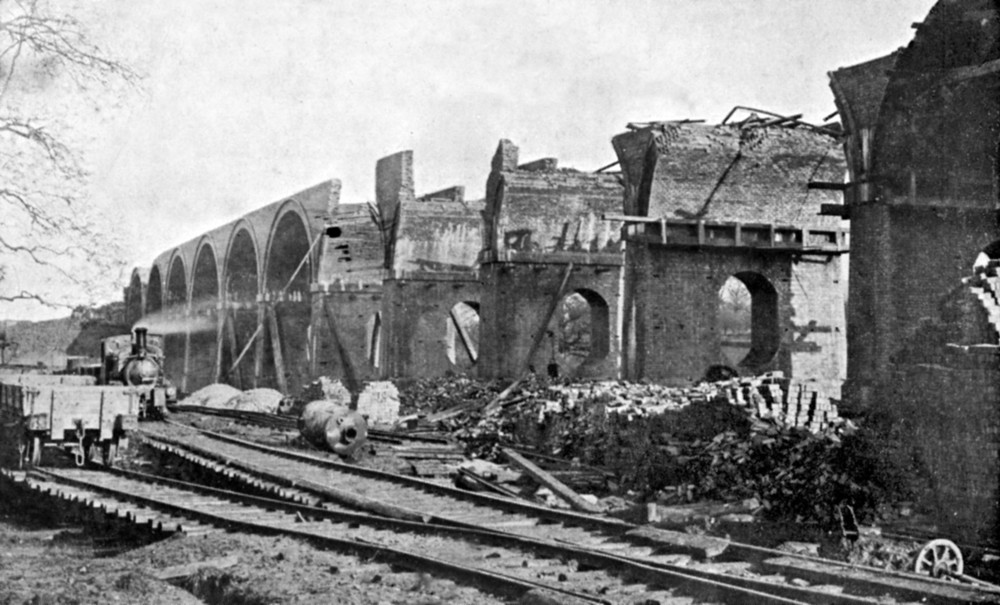
To maintain these 'flat and fast' standards through the Cotswold hills, the GWR completed immense engineering feats, most notably the 15-arch Stanway Viaduct and the 693-yard Greet Tunnel, allowing the line to function as a high-speed trunk route while serving the local agricultural trade.
The line was brought to life in stages, reflecting the steady march of GWR's ambition. The rails reached Broadway and Toddington in 1904, pushing further south through Winchcombe and Bishops Cleeve over the course of 1905. The final connection was forged on 1st August 1906 at Cheltenham Malvern Road East Junction, linking the new route to the existing line into Cheltenham St. James and onward toward Gloucester.
Growth, Wartime & Peak Operation (1906–1950s)
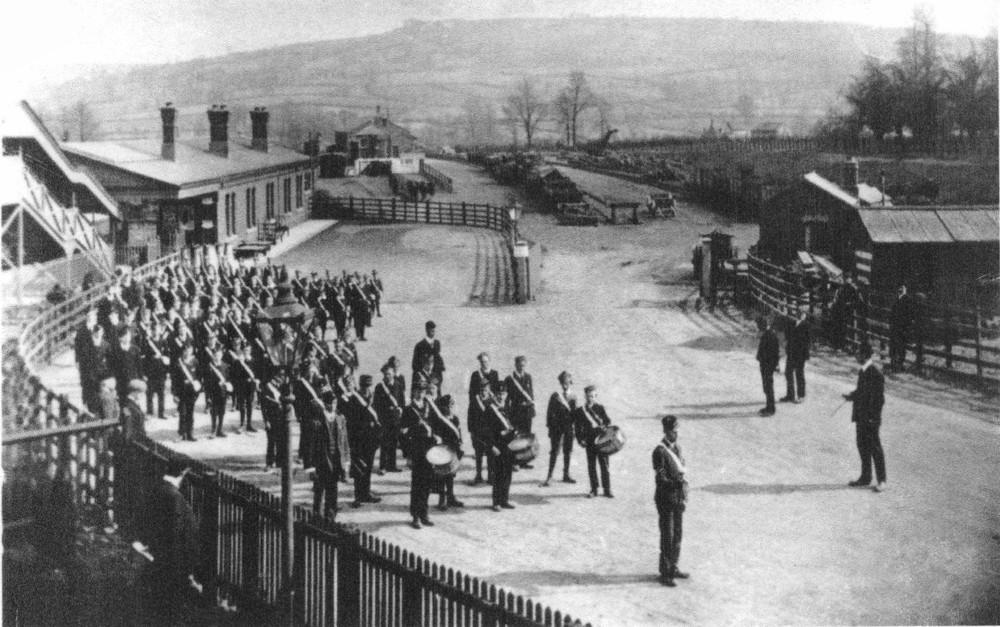
In its heyday, the Honeybourne Line served as a vital artery of the Great Western Railway, blending local utility with national strategic importance. It was a bustling corridor for passengers, catering to both the daily needs of Cotswold residents traveling between market towns and the seasonal influx of thousands of racegoers heading to the world-famous Cheltenham Racecourse. Beyond its role in leisure and local transit, the line was a powerhouse for industry, moving heavy freight that included coal, manufactured goods, agricultural produce, and the renowned fruit harvests from the Vale of Evesham.
The route's importance was perhaps most visible during times of national crisis. Throughout both World Wars, the line saw heavy military traffic, serving as a critical link for moving troops and supplies across the country. It also played a deeply human role in the Second World War as part of the massive evacuation programme; its platforms were often crowded with children being carried away from urban centers of Birmingham to the safety of the countryside.
Decline & Closure (1960–1976)
Following nationalisation and the rapid rise of road transport, the route’s strategic importance steadily eroded. The first major blow fell in 1960 when local passenger stations, including Toddington, Winchcombe, and Broadway, were closed to the public. By the late 1960s, the line’s status as a major express corridor was officially over; British Rail rerouted the famous "Cornishman" express via the Lickey Incline, leaving the double-track route to serve primarily as a heavy freight artery and a useful diversionary path for long-distance passenger trains.
The line’s survival ended abruptly in August 1976 when a freight train derailment just outside Winchcombe caused extensive damage to the track. Seizing the opportunity to avoid costly repairs on a route they already considered redundant, British Rail opted for permanent closure. The through-route from Stratford was severed, and in 1979 demolition crews arrived to lift the rails for scrap, leaving the infrastructure to the elements.
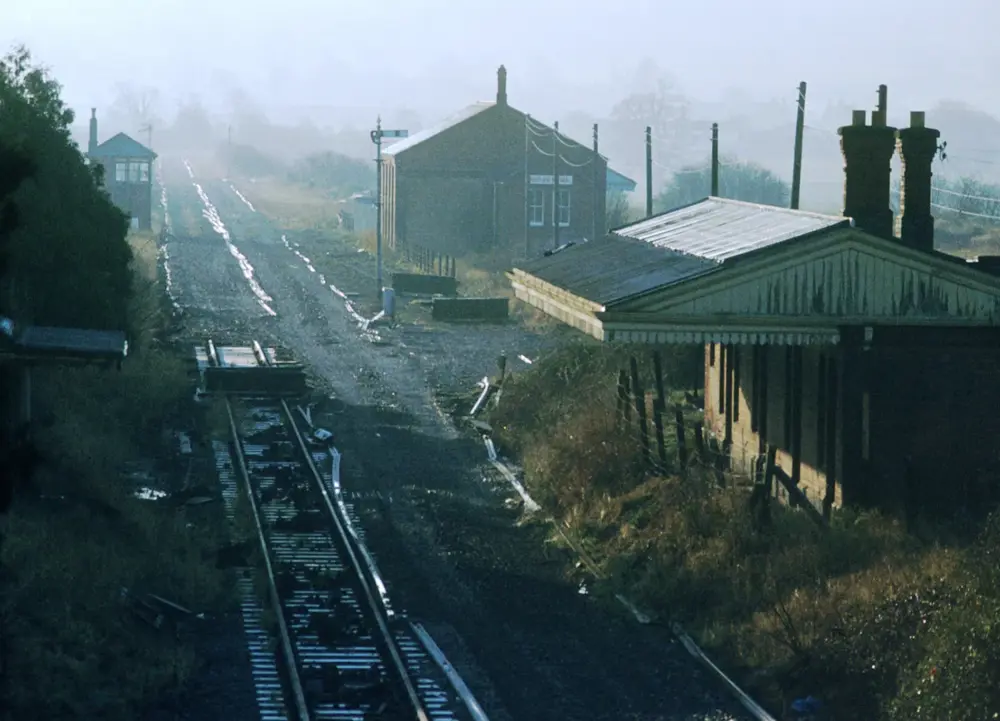
In the years following the track lifting, the once-thriving route became a haunting corridor of overgrown embankments and silent trackbed. Abandoned and increasingly reclaimed by nature, the line appeared destined to disappear from the map entirely.
The Rebirth: Volunteers Step In (1980s)
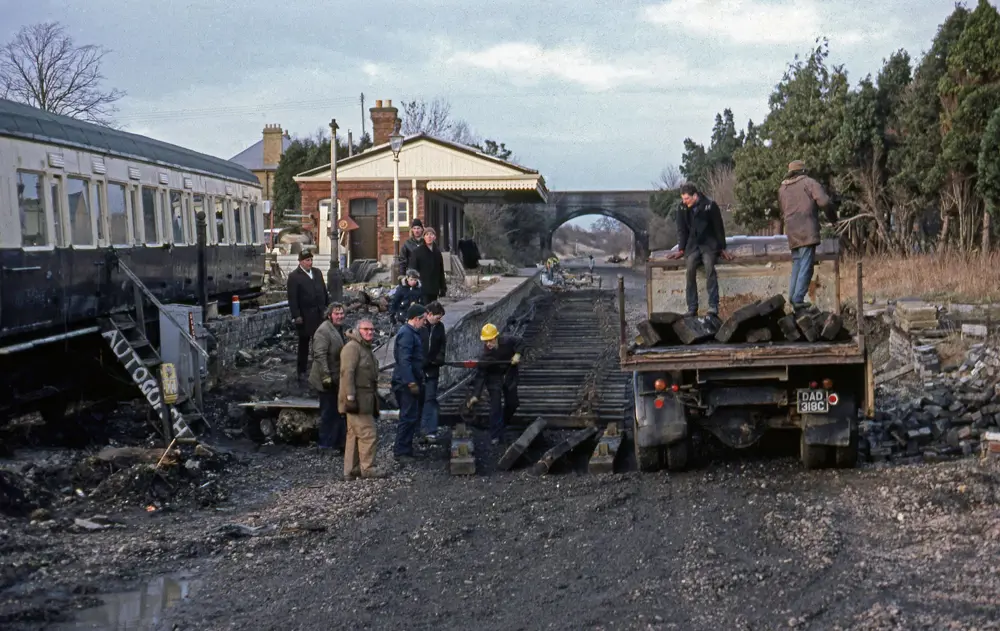
When the pioneers first arrived at Toddington, they found a site that was a haunting skeleton of its former self. While the original station building, the goods shed, and the signal box still stood, they were empty shells surrounded by a wasteland; the tracks had been ripped up, platforms demolished, and the signal box had been stripped of its lever frame. Everything required to actually run a railway had to be recreated from scratch.
Progress was hard-won and measured in yards rather than miles. These early volunteers took on the monumental task of:
Reclaiming the Trackbed: Clearing overgrown vegetation and repairing neglected bridges and drainage systems.
Laying the Groundwork: Starting with just a few hundred yards of track at Toddington, they painstakingly relaid the line by hand, sleeper by sleeper.
Equipping the Line: Rebuilding the platforms and acquiring the locomotives and a few carriages needed to run a simple train service.
This was community railway restoration at its very best - powered almost entirely by volunteer labour.
Reopening & Steady Expansion (1984–2018)
The first public steam shuttles in 1984 were a modest beginning, but they proved that the "Honeybourne Line" had a future as well as a past. What followed was a bit-by-bit revival that saw the railway gradually claw back its territory from nature. This progress was defined by a series of key milestones:
The Early Foothold (1984): The first short section of track opened to passengers at Toddington, marking the return of fare-paying travellers to the line for the first time in decades.
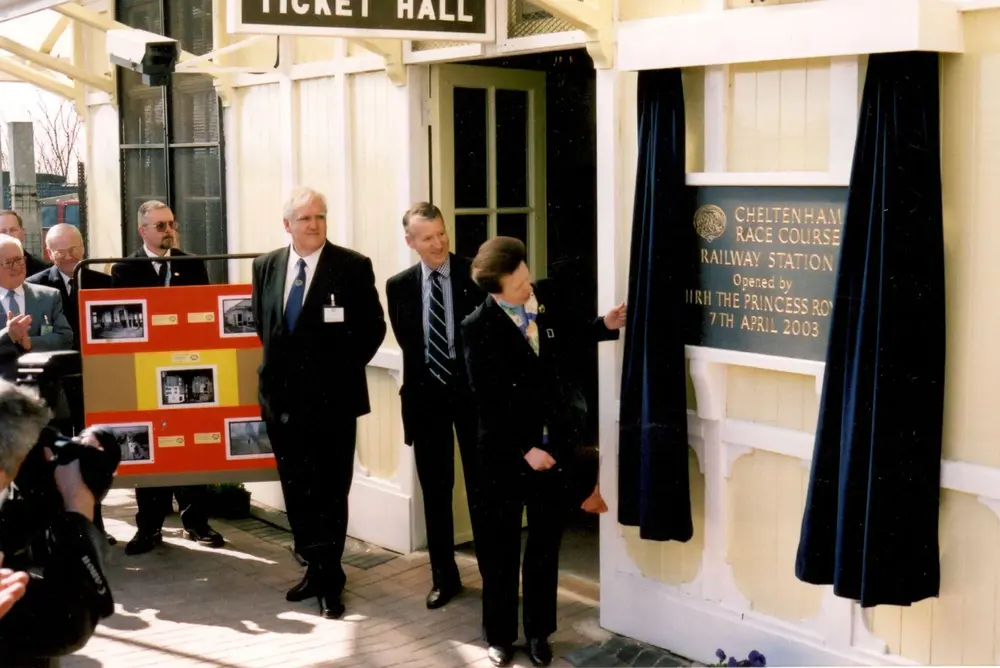
Southern Expansion (1990s–2000s): Through monumental engineering efforts, the rails pushed south, reaching Winchcombe, passing through the Greet Tunnel, Gotherington, and eventually arriving at Cheltenham Race Course in 2003.
The Broadway Return (2018): After years of fundraising and manual labour, the line finally reached Broadway. Volunteers rebuilt the station building brick by brick to a design that meticulously mirrored the original GWR architecture—a crowning achievement that transformed the GWSR into a true destination railway.
The Railway Today
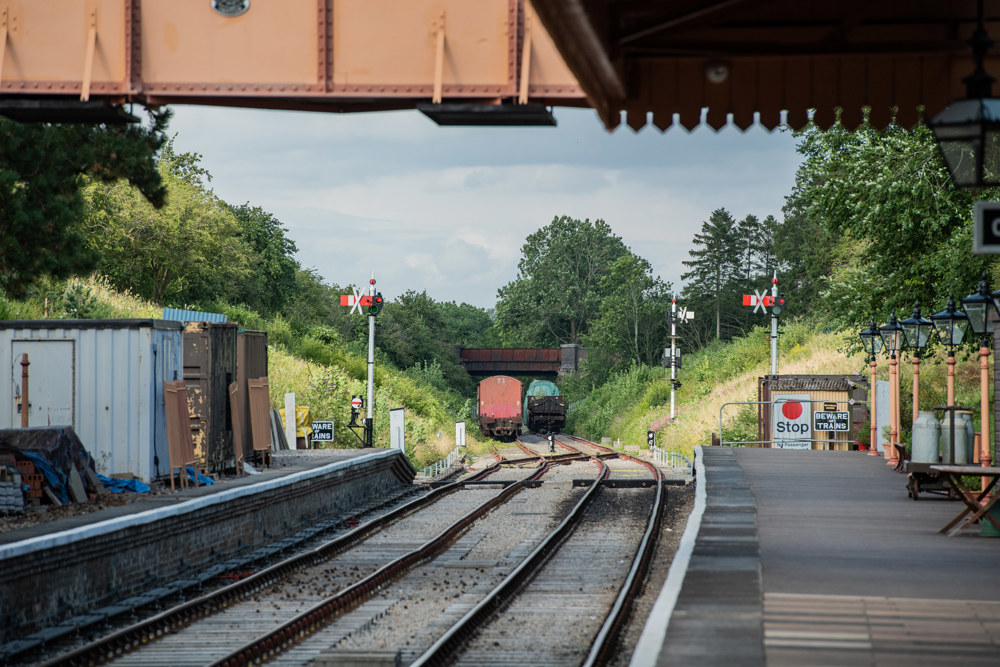
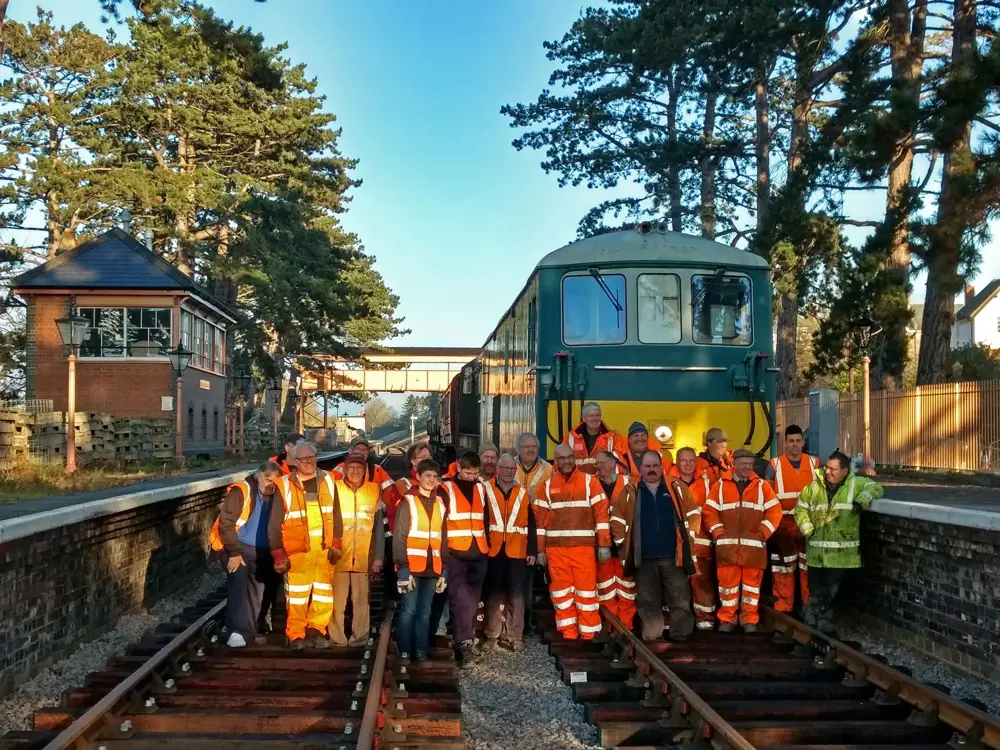
Today, the GWSR operates a 14-mile line (offering a 28-mile round trip) through some of the most scenic countryside in England. Running both steam and vintage diesel services, the railway is a remarkable living monument to the volunteers who refused to let the line die. It stands as one of the UK’s premier heritage railways —a feat of persistence considering the route was once completely dismantled and abandoned.
It is now:
A Living Museum: A faithful preservation of Great Western Railway heritage, from the rolling stock to the period-correct signalling.
A Thriving Visitor Attraction: A key part of the Cotswold tourism economy, bringing history to life for thousands of visitors annually.
A Training Ground: A vital centre for preserving traditional engineering, masonry, and railway operational skills for future generations.
A Community Hub: A place where families, enthusiasts, and holidaymakers come together to experience the golden age of rail.
Looking Ahead
The same spirit that rebuilt the railway from a wasteland in 1981 drives its ambitions today. Because the GWSR occupies a former double-track main line, it has a unique advantage: a wide, strategic footprint with undeveloped land and original infrastructure with room to grow further. The story of the "Honeybourne Line" is far from finished.
Possible future chapters of the railway’s story could include:
The Honeybourne Extension: The long-term ambition to push the rails north to reconnect with the national rail network at Honeybourne.
Enhancing Capacity: Projects to restore sections of double track and install a locomotive turntable, allowing the railway to handle more traffic and authentic GWR operations.
Modern Facilities: The development of new visitor centres and education hubs to ensure the skills of the steam age are passed on to the next generation.
The GWSR isn’t just preserving the past; it is keeping it alive, steam whistle and all. Through the dedication of its volunteers, the railway continues to prove that even a line once completely dismantled can have a bright future.